

Save Water at Home
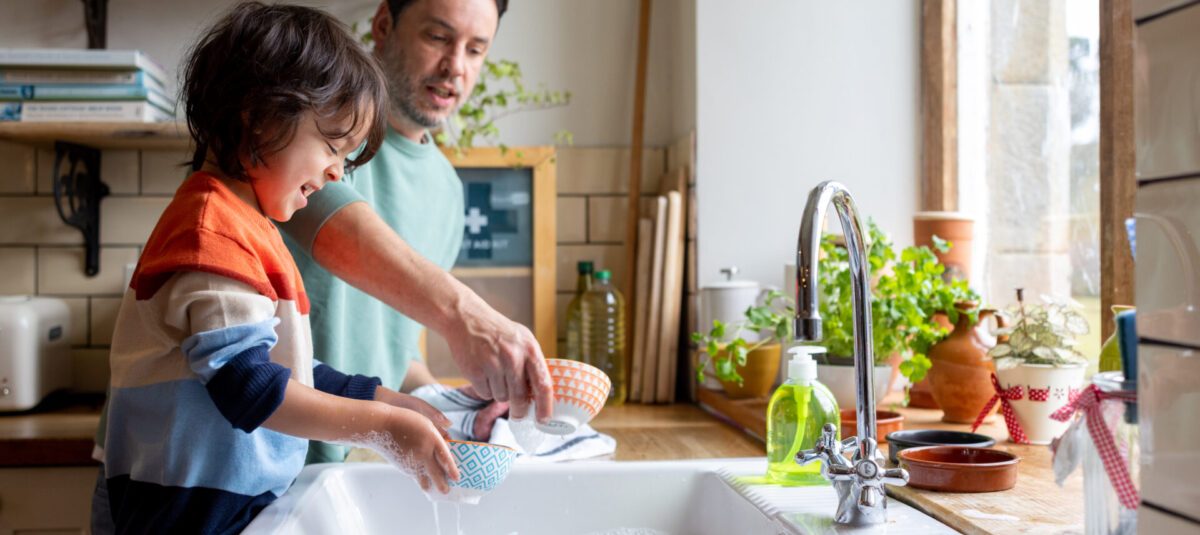
Everyday activities like washing dishes, taking showers, and doing laundry can use a lot of water. Using water wisely can help lower your utility bill and protect our water supply. It also leaves more water in rivers for salmon and other wildlife. Small changes at home can add up. Use the tips below to help reduce your water use.
Free water-saving products
Tacoma Water customers can request free water-saving products, including efficient showerheads, faucet aerators, and outdoor watering supplies.
Ways to save water at home
-
WaterSense-labeled fixtures and a few simple habits can help reduce water use without sacrificing performance. The U.S. Environmental Protection Agency (EPA) sets WaterSense efficiency standards for many household water products.
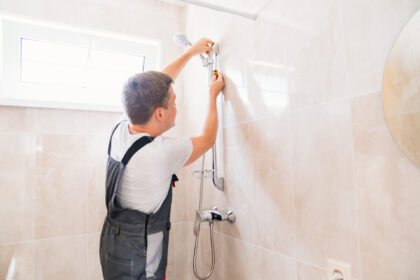
- Install a WaterSense showerhead. WaterSense-labeled showerheads use no more than 2 gallons per minute. EPA estimates the average family can save 2,700 gallons of water each year by installing WaterSense-labeled showerheads.
- Use water-efficient bathroom faucets and aerators. WaterSense-labeled bathroom faucets and aerators use no more than 1.5 gallons per minute, compared with the standard flow of 2.2 gallons per minute.
- Take shorter showers and choose a shower instead of a bath when possible.
- Capture water while your shower warms up and reuse it for household plants.
- Turn off the tap while brushing your teeth or shaving.
- Check toilets for leaks. Worn flappers are a common source of silent leaks.
- Choose a WaterSense toilet when it is time to replace one. WaterSense-labeled toilets use 1.28 gallons per flush or less, while older inefficient toilets can use as much as 6 gallons per flush.
- Flush only when needed and avoid using the toilet as a trash can.
-
Laundry uses both water and energy. Choosing efficient equipment and changing a few everyday habits can help reduce both.
- Wash full loads whenever possible.
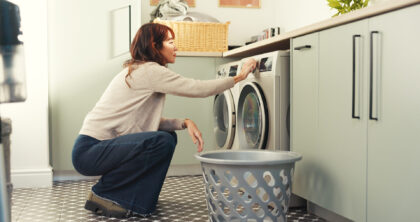
- Choose the correct load-size setting when you need to wash a smaller load.
- Use cold water when appropriate.
- Skip extra rinse cycles unless they are needed.
- Reuse towels before washing them.
- Choose an ENERGY STAR-certified washer when it is time to replace your machine. ENERGY STAR-certified clothes washers use no more than 14 gallons of water per load, compared with 20 gallons for a standard machine.
- Consider an energy-efficient water heater when it is time for a replacement.
- Wash full loads whenever possible.
-
Small changes in how you prepare food, wash dishes, and use the faucet can reduce water use throughout the day.
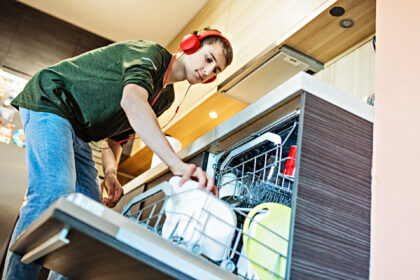
- Turn off the tap when you are not using it.
- Fill the sink or use a basin instead of leaving water running when washing dishes by hand.
- Scrape dishes instead of rinsing them before putting them in the dishwasher.
- Run the dishwasher when it is full.
- Keep drinking water in the refrigerator instead of running the tap until it gets cold.
- Thaw frozen food in the refrigerator instead of under running water.
- Compost food waste instead of using the garbage disposal when possible.
- Choose an ENERGY STAR-certified dishwasher when it is time to replace one. ENERGY STAR-certified dishwashers use 3.2 gallons of water or less per cycle, compared with the federal standard of 5 gallons per cycle.