Tacoma Water partnership with the Cascade Water Alliance
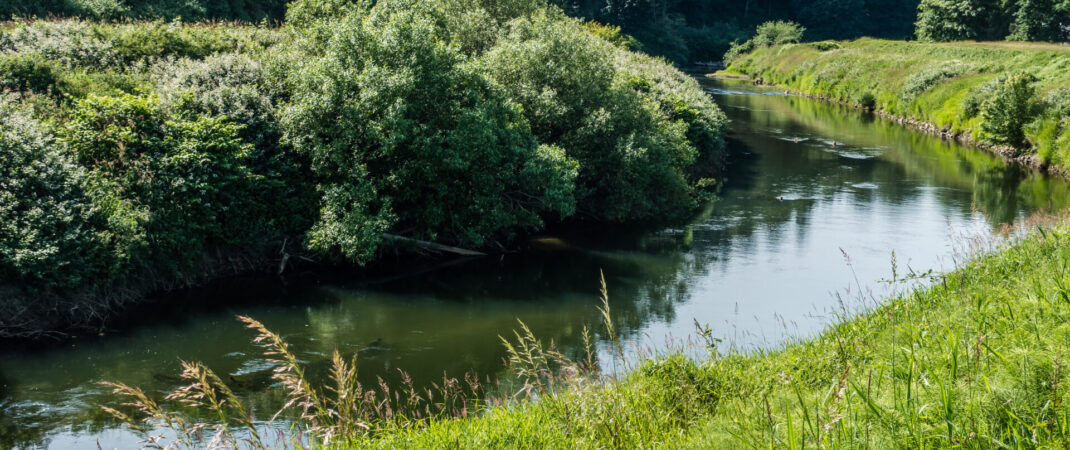
Lush foliage surrounds the Green River as it flows through Kent, Washington.

The Agreement

Tacoma Water has negotiated a wholesale water supply agreement with the Cascade Water Alliance (Cascade). Under this agreement, Tacoma Water will deliver water to the edge of our service territory, and Cascade will then deliver the water to its members.   

Tacoma Water will start delivering water to Cascade in 2041. The agreement has Cascade start with a small portion of water in 2041 and steadily increase delivery to up to 32.5 million gallons per day by 2060. After 2062, Cascade’s delivery will be reduced to 15 million gallons per day (MGD) on a peak day.   

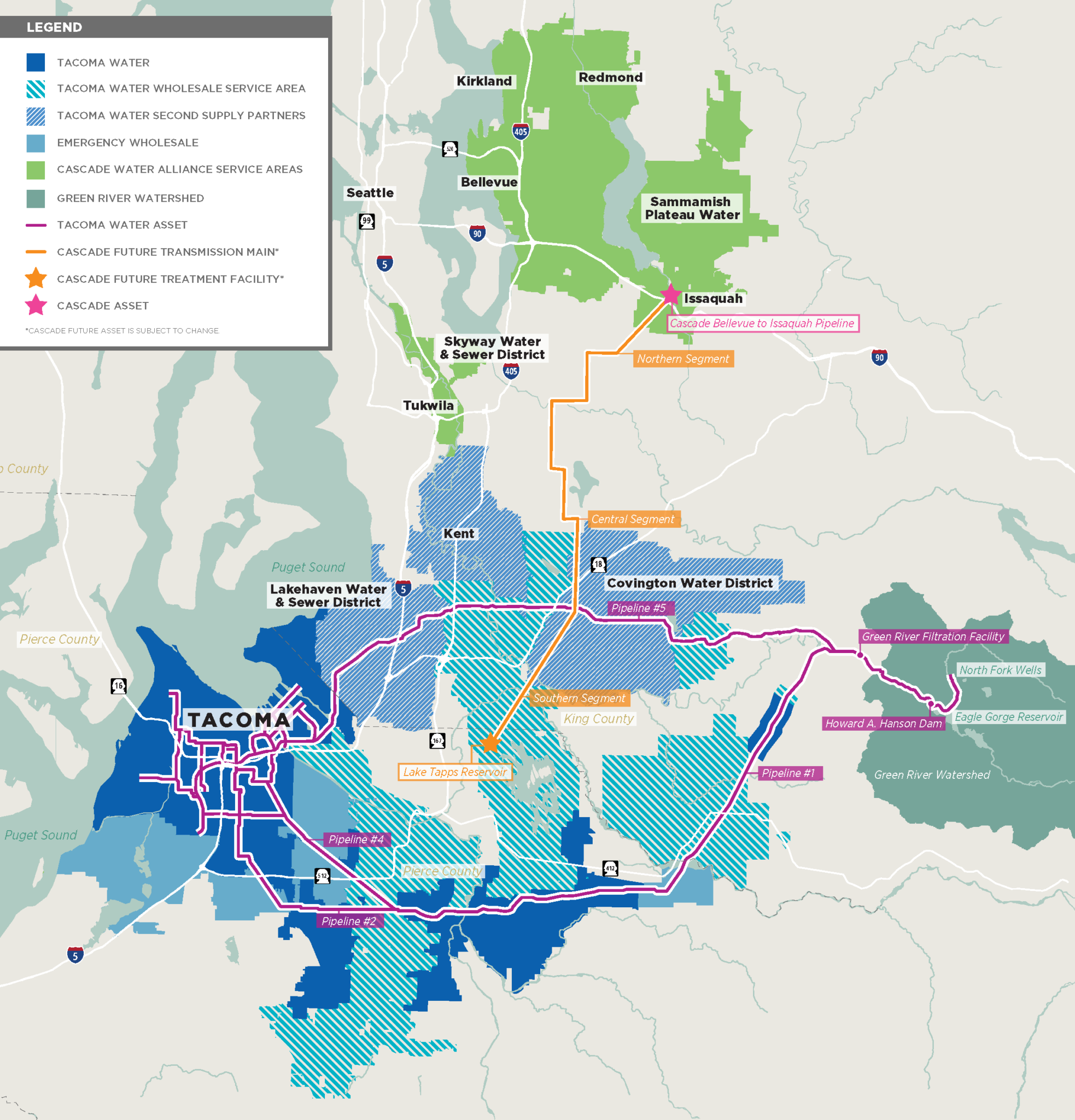
Currently, no infrastructure connects the Tacoma and Cascade systems. Cascade will need to finance, construct, operate, and maintain a water transmission main from Tacoma’s Pipeline 5 to its customers.

Project Milestones

Milestone Complete

Tacoma and Cascade execute a temporary wholesale contract providing Cascade with up to 17.5 MGD-Peak Day from 2041 to 2062. 

Tacoma and Cascade execute a permanent wholesale contract that provides Cascade with up to 15 MGD-Peak Day. 

Milestone In Progress

Cascade begins payments to Tacoma Water. 

Milestone In Progress

Cascade begins the design and construction of its transmission system.  

Milestone In Progress

Cascade’s Transmission system is completed and water delivery from Tacoma begins.  

Delivery will start small (1 or 2 MGD), then increase slowly until reaching up to 32.5 MGD-Peak Day in the early 2060s. 

Milestone In Progress

The temporary supply to Cascade ends. Deliveries to Cascade will not exceed 15 MGD-Peak Day. 

Cascade Water Alliance Map

A detailed map of the Tacoma Water and Cascade Water Alliance service region in the Puget Sound area of Washington, extending from Seattle, Bellevue, and Redmond in the north to Tacoma and the Green River Watershed in the south and east. The map uses solid and hatched colored areas to distinguish water-service areas, partner systems, emergency wholesale areas, and the Green River Watershed. Magenta lines mark Tacoma Water assets and pipelines, while orange lines identify the Cascade future transmission main. Orange and magenta star symbols mark a future treatment facility and a Cascade asset. Major cities, water districts, reservoirs, dams, wells, highways, counties, and geographic features are labeled. A legend occupies the upper-left corner.

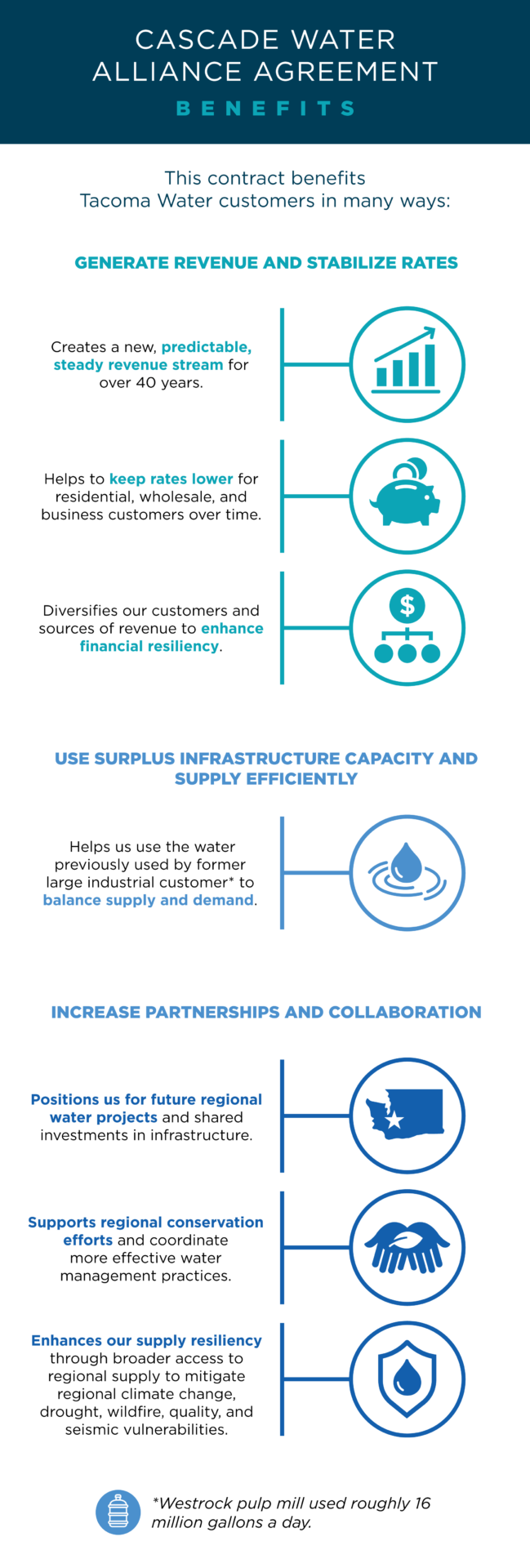
A vertical infographic titled “Cascade Water Alliance Agreement Benefits” explains how the contract benefits Tacoma Water customers. The design uses a dark teal header, a white background, teal and blue section headings, black explanatory text, and circular line icons connected to vertical and horizontal lines. The first section, “Generate Revenue and Stabilize Rates,” lists three benefits: creating a new, predictable, steady revenue stream for over 40 years; helping keep rates lower for residential, wholesale, and business customers over time; and diversifying customers and revenue sources to enhance financial resiliency. The accompanying icons show an upward-trending bar chart, a piggy bank, and a dollar sign above connected figures. The second section, “Use Surplus Infrastructure Capacity and Supply Efficiently,” explains that water previously used by a former large industrial customer can help balance supply and demand. A circular icon shows a water droplet creating ripples. The third section, “Increase Partnerships and Collaboration,” lists three benefits: positioning the organization for future regional water projects and shared infrastructure investments; supporting regional conservation efforts and more effective water management practices; and enhancing supply resiliency through broader regional access to mitigate climate change, drought, wildfire, quality, and seismic vulnerabilities. Icons depict Washington State with a star, two clasped hands, and a shield containing a water droplet. A footnote at the bottom states that the Westrock pulp mill used roughly 16 million gallons of water per day.