

Find & Fix Leaks
Leaks can waste a lot of water and raise your bill. U.S. homes lose nearly 1 trillion gallons of water each year from household leaks. The average home loses about 10,000 gallons a year. Finding and fixing common leaks can save you more than 10% on you water bill. You can use the AWWA Drip Calculator to estimate how much water a dripping faucet may waste.
Signs you may have a leak
Common household leaks include running toilets, dripping faucets and leaking valves. You may also have a leak if your water bill goes up without a clear reason. A sudden increase after freezing weather may also point to a leak.
Get leak notifications
Residential customers can sign up for Water Leak Notifications and High Usage Notifications in MyAccount. Water Leak Notifications can help you spot a possible leak or burst pipe. High Usage Notifications can alert you when your water use goes above the level you choose. You can choose email, text message or both.
Business customers can sign up for High Usage Notifications by email, text message or both. Water Leak Notifications are not currently available for business customers.
How to sign up
- Log in to MyAccount. If you do not have an account, register for one first.
- From your dashboard, find Quick Links and select Notification Preferences.
- Find Residential Water Leak notifications and choose email, text message or both.
- If you want High Usage Notifications, set an Alert Percentage.
- Scroll down and select Save Changes.
How to check for a leak
-
Log in to MyAccount to see detailed water-use data and look for signs of a leak. Your advanced meter records your water use throughout the day. If it records water use every hour without a break, you may have a leak. If our records show a significant increase in your water use, we review the information and send you a letter with recommended next steps.
Note: If you enroll in Water Leak Notifications, you will not receive a separate leak letter
Check your usage:
- From your MyAccount dashboard, open the Usage menu and select Usage Dashboard.
- A new window will open. Select Water to see a blue graph of your monthly water use.
- Next to Period, open the dropdown menu to view daily water use.
- Select a day to see your hourly water use.
- Look for a time when your water use drops to zero. Most households use no water for part of the day.
- If the graph never drops to zero, or you see a new level of steady water use, you may have a leak.
If you think you have a leak, take steps to find and fix it.
-
Your advanced water meter can also help you check for a leak. Before you test, turn off all faucets, water-using appliances and outdoor watering systems. Do not use any water during the test.
Watch this short video to learn how to use the flow indicator on your meter.
If you need to read your meter, read the numbers from left to right. The first four numbers show the total amount of water that has passed through the meter since it was installed. Your meter measures water use in CCF. One CCF equals 100 cubic feet, or 748 gallons.
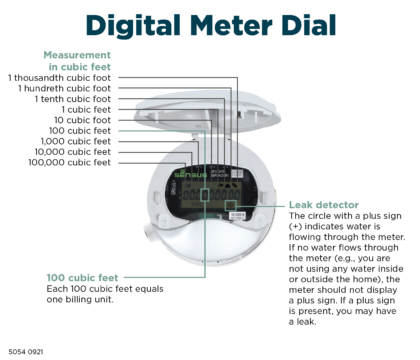 To find how much water you used, subtract your earlier meter reading from your current reading. Use the diagram to see what each number on the digital meter means.
The meter shows these place values from left to right:
- 100,000 cubic feet
- 10,000 cubic feet
- 1,000 cubic feet
- 100 cubic feet
- 10 cubic feet
- 1 cubic foot
- 1 tenth cubic foot
- 1 hundredth cubic foot
- 1 thousandth cubic foot
If a plus sign (+) is shown inside the circle on the meter display, water is currently flowing through the meter.
-
Use the whole-house shutoff valve on your property to turn your water service on or off when possible. You may find the valve in a crawl space, valve box or near your water heater. In an emergency, you may use the yoke stop valve inside the city meter box.
To open the meter box and replace the lid:
- Use a long screwdriver or similar tool in the lifting slot to remove the lid.
- Take care not to disconnect or damage the advanced meter communication wire.
- When you replace the lid, make sure the cable does not get caught between the box and lid.
- Make sure the lid sits level with the ground and does not rock.
Need help with your water meter or an emergency turn on/off? Call Tacoma Water at 253-502-8384.
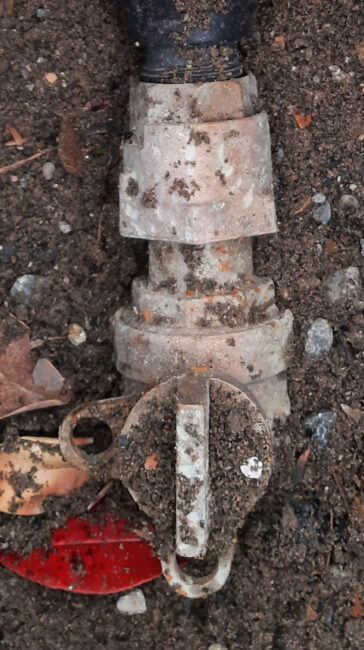
Yoke Stop
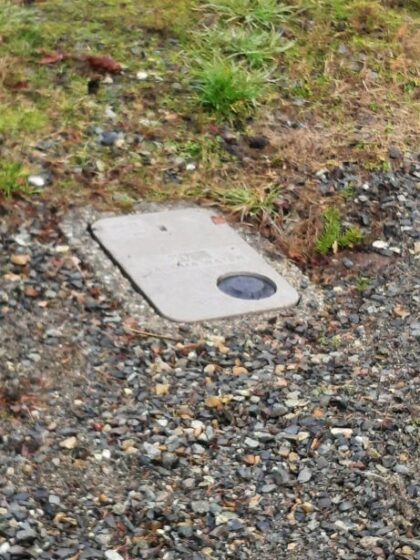
Water Meter Box Lid
Locating a Leak
Finding a leak may take some detective work. Leaks in underground pipes can be harder to find. Check inside and outside your home for signs of water where it should not be.
There may be financial assistance available to replace your leaking water service line through the Water Grant and Loan Program.
Learn about the program-
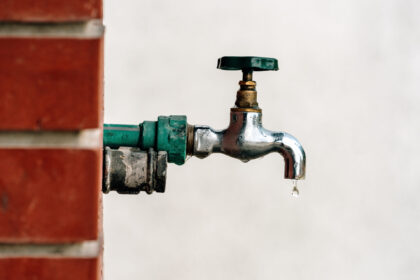
- Check outdoor faucets. Look for water where your hose connects to
the faucet. - Check sprinkler and drip systems. Look for soggy soil around sprinkler heads after you run the system. Also check for water around control valves.
- Look for broken sprinkler heads or pipes. Turn on your irrigation system and watch for water spraying or pooling where it should not.
- Look for unusual green spots. If most of your lawn has gone golden but one area stays green, you may have an underground leak.
- Check outdoor faucets. Look for water where your hose connects to
-
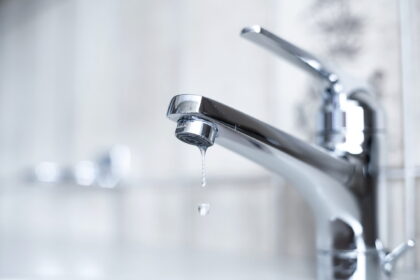
- Look for dripping faucets.
- Check around faucets and pipe fittings. Look for water around gaskets, connections and pipes.
- Listen for running toilets. A toilet that keeps running after a flush, or starts running when no one has used it, may have a leak.
- Check showerhead connections. If water leaks where the showerhead connects to the pipe, the connection may need tightening or repair.
Did you know?
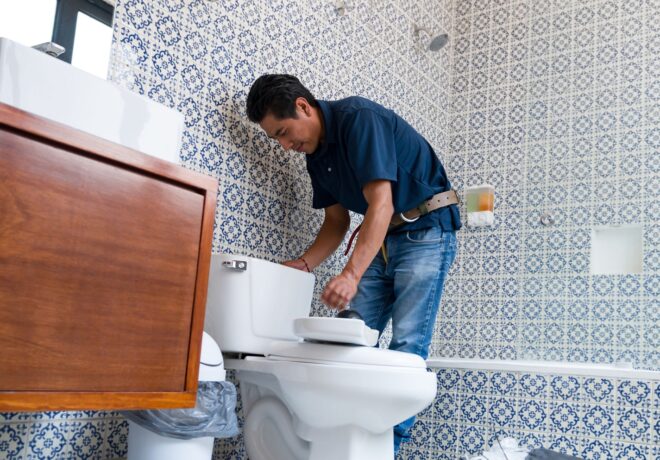
Fix your flapper
How to check for toilet leaks
-
Remove the tank lid
Flush the toilet and watch the tank refill.
-
Check the water level
The water should stop at the fill line inside the tank. If water keeps flowing into the overflow tube, the toilet may need an adjustment or repair. Consider contacting a plumber if you are not sure how to fix it.
-
Add food coloring
Put a few drops of food coloring into the tank.
-
Wait 15 minutes
Do not flush. After 15 minutes, check the toilet bowl. If color appears in the bowl, the flapper may be leaking.
-
Flush the toilet
A worn flapper is often easy to replace. Make sure the new flapper fits your toilet. A damaged valve seat may need help from a plumber.
Bill adjustments for severe leaks
If a severe leak caused a sudden increase in your bill, you may qualify for an adjustment. Contact customer service at 253-502-8600 for more information.