

Water Main Flushing
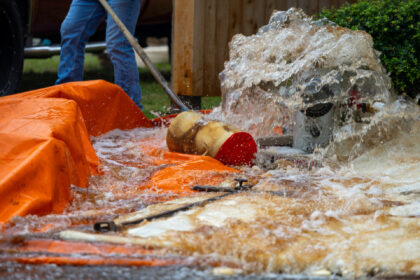 Tacoma Water regularly flushes the pipes in our water system to remove rust and sediment, which helps you consistently receive clean, reliable water.
Flushing forces high-velocity water to flow through the pipes and out through fire hydrants. Along with deep cleaning the inside of water mains (pipes), this also helps us find and repair certain valves and hydrants before they cause problems and refresh the water.
When will your pipes be flushed?
-
- A few weeks before flushing begins in your neighborhood, we will mail you a notice.
- Several days before flushing, crews will place signs at major intersections that lead into your neighborhood and at the flushing area. Crews will move these signs each day as work progresses.
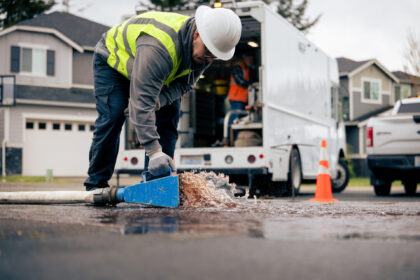
- During flushing, you might see utility crews working at hydrants and valves in intersections and at the end of cul-de-sacs.
- Your water pressure may decrease during flushing. This is normal and temporary.
- Rust and sediment stirred up during flushing will likely discolor your water. This is temporary, not harmful, and should clear up quickly; even though the water will temporarily look different, it’s still safe to drink.
- Try to not run the tap or turn on appliances that use water, such as dishwashers and washing machines, while flushing is going on in your area.
- If you do get discolored water or find sediment in your water, remove any aerators from your faucets and run the cold tap for a few minutes.
- Make sure your first load of laundry after a water flushing consists of dark clothes only.
-
We perform two types of flushing operations:
- Systematic flushing
- Dead-end flushing
Both help you receive clean, safe and reliable water service. Flushing also complements our existing water testing and preventive maintenance programs.
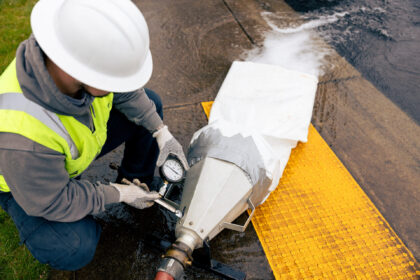
We collect data during the flushing process to confirm the water’s condition and its capacity to meet hydrant fire flow requirements (this means enough water will come out of the hydrant when firefighters use it).
Systematic flushing
During the systematic flushing process, crews will open and close street isolation valves, and work at fire hydrants in street intersections and at the end of cul-de-sacs. Crews will isolate sections of the water system and open fire hydrants to release pressure (we call this a blow off), making the water flow out at a high velocity. This action pushes and removes sediment that routinely settles at the bottom of the water main.
Dead-end flushing
During the dead-end flushing process, we flush water from a fire hydrant or a dead-end blow-off connection. Our aim is to refresh the water in less-used portions of the system where water, while still safe, can become stale. You are unlikely to experience any negative effects from dead-end flushing operations.
Questions?
If you have questions, or if your water does not clear up within a short time after flushing ends, please contact our Water Quality Section at 253-502-8207 or waterquality@tacoma.gov. If it’s after business hours, call the Water Emergency Control Center at 253-502-8344.